Investing in the stock market often comes with confusing terms, and one phrase that many beginners hear is stock split. When a company announces a stock split, investors often wonder: “Will my investment become more valuable?” “Will I make more money?” or “Should I buy more shares before the split happens?” These questions are common because stock splits can look complicated at first, but the basic idea is actually simple. A stock split changes the number of shares available while adjusting the share price proportionally, allowing more investors to participate without changing the company’s actual market value.
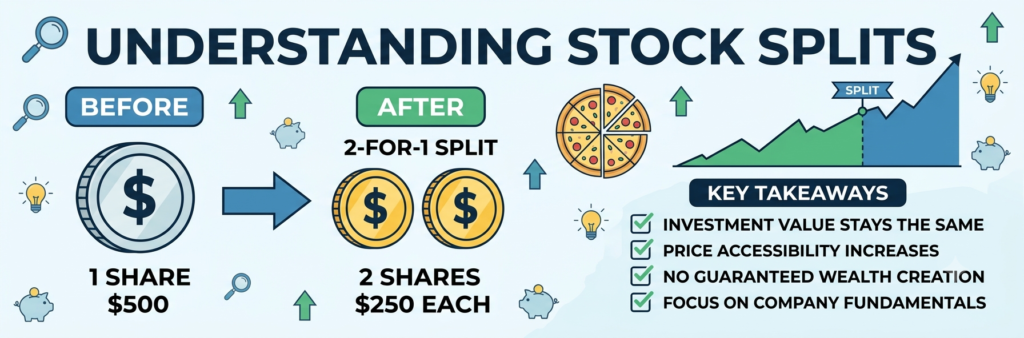
A stock split explained approach helps investors understand that a split does not magically create wealth overnight. Instead, it changes the structure of ownership by dividing existing shares into smaller pieces. For example, if you own one share worth $1,000 and the company announces a 10-for-1 stock split, you will receive ten shares worth approximately $100 each. Your total investment value remains around $1,000 immediately after the split. The company’s market capitalization does not change simply because more shares exist.
Understanding stock splits is important because they often happen with successful companies that have experienced significant growth. Businesses may split their stocks when their share prices become too expensive for average investors. By lowering the individual share price, companies can make their stocks appear more affordable and attractive to a wider group of investors.
Understanding the Meaning of a Stock Split
A stock split is a corporate action where a company increases the number of its outstanding shares by dividing existing shares into multiple units. The company’s board of directors decides when and whether to announce a split. Although the number of shares increases, the value of each individual share decreases proportionally.
Think of a stock split like cutting a pizza into more slices. If you own half of a pizza and cut that half into four smaller pieces, you still own the same amount of pizza. The number of pieces increases, but the total value does not change. A stock split works in a similar way for investors.
Companies usually announce stock splits when their share prices have increased significantly over time. A high share price is not necessarily bad, but some businesses believe a lower price per share makes their stock easier for smaller investors to buy.
For example:
- A company with shares trading at $1,000 may announce a 5-for-1 stock split.
- Investors receive five shares for every one share they own.
- The share price adjusts to around $200.
- The total investment value remains the same.
The main purpose is not to increase the company’s value instantly but to improve accessibility and market participation.
Why Companies Decide to Split Their Stocks
Companies choose stock splits for several strategic reasons. One major reason is improving the affordability of their shares. Although modern investing platforms allow people to buy fractional shares, many investors still prefer owning complete shares. A lower stock price can make a company appear more approachable.
Another reason is increasing liquidity. When more investors can easily buy and sell shares, trading activity may increase. Higher liquidity can create a smoother market for buyers and sellers.
Companies may also use stock splits as a signal of confidence. A business that has grown enough to consider splitting its stock is often communicating that management believes the company has strong future potential.
Some common reasons for stock splits include:
- Making shares accessible to more investors.
- Increasing trading activity.
- Creating positive market attention.
- Rewarding long-term shareholders psychologically.
- Aligning the share price with industry standards.
However, investors should remember that a stock split itself does not improve company fundamentals. Revenue, profits, debt levels, and business performance remain the real factors that determine long-term value.
How a Stock Split Works Step by Step
When a company announces a stock split, several steps occur before investors see changes in their accounts.
First, the company announces the split ratio. This could be a 2-for-1 split, 3-for-1 split, 5-for-1 split, or another ratio. The ratio tells investors how many new shares they will receive for each existing share.
Next, the company sets important dates, including the record date and the effective date. Investors who own shares before the required date are eligible to receive additional shares.
After the split becomes effective, brokerage accounts automatically update. Investors usually do not need to take any action.
Stock Split Example Explained Simply
Imagine you own 20 shares of a company trading at $500 per share.
Your investment value:
20 shares × $500 = $10,000
The company announces a 5-for-1 stock split.
After the split:
100 shares × $100 = $10,000
You now own more shares, but your total investment value remains approximately the same.
Over time, the value of your investment will depend on how the company performs after the split.
How a Stock Split Affects Your Shares
Many investors misunderstand stock splits because receiving additional shares feels like receiving free money. However, the additional shares simply represent a division of ownership.
After a stock split:
- Your number of shares increases.
- The price per share decreases.
- Your overall ownership percentage remains unchanged.
- The company’s total market value remains the same.
For example, if you owned 0.01% of a company before the split, you still own approximately 0.01% afterward.
The real impact of a stock split comes from what happens next. Sometimes stock splits attract new investors, increase demand, and create positive momentum. Other times, the stock price may move based on business performance rather than the split itself.
A stock split should never be the only reason you buy a stock. Investors should always analyze the company’s financial health, competitive position, growth potential, and valuation.
Is a Stock Split Good or Bad for Investors?
A stock split is not automatically good or bad. Its impact depends on the company, market conditions, and investor expectations.
Advantages of Stock Splits
One major benefit is increased accessibility. Lower share prices can allow more investors to participate.
Another advantage is improved liquidity. More investors trading a stock can sometimes create easier buying and selling opportunities.
Stock splits can also create positive attention. Investors often view splits from successful companies as signs of strong past performance.
Benefits may include:
- Easier buying opportunities for smaller investors.
- Increased market awareness.
- Potential improvement in trading volume.
- Positive investor sentiment.
Possible Risks Investors Should Understand
Although stock splits can attract attention, they do not guarantee future growth.
A company can split its stock and still experience declining performance. Investors should avoid buying shares only because a split has been announced.
Some risks include:
- Buying an overvalued stock because of excitement.
- Ignoring company financial problems.
- Assuming a split guarantees higher returns.
- Following market hype without research.
A stock split changes the appearance of the stock price, not the underlying business.
Why Do Popular Companies Announce Stock Splits?
Many successful companies have used stock splits throughout history. Large technology companies, consumer brands, and growing businesses often split their shares after long periods of price appreciation.
The reason is simple: a rising stock price can eventually become psychologically expensive for investors.
A company whose shares trade at several thousand dollars may appear unreachable to many individuals. By splitting shares, the company can create a more attractive entry point.
However, investors should focus less on the split itself and more on why the company reached that point. Strong businesses with consistent growth are usually the ones that consider splits.
What Should You Do After a Stock Split Announcement?
When a company announces a stock split, investors should avoid making emotional decisions. The announcement may create excitement, but careful analysis is still necessary.
Consider these steps:
- Review the company’s financial performance.
- Understand why the company announced the split.
- Evaluate long-term growth opportunities.
- Avoid buying only because others are excited.
- Continue following your investment strategy.
If you already own shares, you usually do not need to do anything. Your brokerage account will automatically reflect the updated number of shares.
Mistakes Investors Should Avoid
One common mistake is believing that a stock split makes shares cheaper in terms of value. A $100 stock after a split is not necessarily cheaper than a $500 stock before the split because the ownership value adjusts.
Another mistake is assuming every stock split leads to price increases. While some companies perform well after splits, others may not.
Smart investors look beyond headlines and examine the company’s fundamentals.
Stock Split vs Reverse Stock Split
A regular stock split increases the number of shares while lowering the price per share. A reverse stock split does the opposite.
In a reverse stock split, companies combine multiple shares into one larger share. This is often done by companies with very low stock prices that want to meet exchange requirements or improve their market image.
For example:
A 1-for-10 reverse split means ten shares become one share.
Unlike regular splits, reverse splits are sometimes viewed negatively because they are often associated with struggling companies.
Common Myths About Stock Splits
Myth 1: A stock split makes investors instantly richer.
A split changes share numbers and prices but does not immediately change investment value.
Myth 2: Every stock split causes prices to rise.
Future performance depends on business results and market conditions.
Myth 3: Lower share price means cheaper valuation.
A stock’s true value depends on earnings, growth, and financial strength.
Myth 4: Investors must do something during a split.
Most splits happen automatically through brokerage accounts.
Conclusion:
A stock split is an important concept that every investor should understand. While it can make shares more accessible and attract market attention, it does not automatically increase your wealth. The key is recognizing that a split changes the number of shares you own, not the actual value of your investment at the moment it occurs.
Learning stock split explained concepts helps investors avoid common mistakes and make better financial decisions. Whether you are a beginner or an experienced investor, always focus on the company’s fundamentals, long-term growth potential, and overall investment strategy rather than reacting only to stock split announcements.
A successful investment is built on research, patience, and understanding. A stock split may open the door for more investors, but the strength of the business behind the shares is what truly matters.
FAQs
1. Does a stock split increase my investment value?
No. A stock split does not immediately increase your investment value. It only increases the number of shares you own while reducing the price per share proportionally.
2. Should I buy a stock before a split?
Buying before a stock split should depend on the company’s financial strength and future potential, not the split itself. A split alone is not a reason to invest.
3. Do I lose money after a stock split?
No. Your total ownership value remains approximately the same immediately after the split. Future gains or losses depend on stock performance.
4. How often do companies split their stocks?
There is no fixed schedule. Companies decide to split stocks when they believe it benefits shareholders and the business.
5. Are stock splits good for long-term investors?
Stock splits can be positive because they often happen in successful companies, but investors should evaluate the company’s fundamentals rather than relying only on the split.