Investing can feel intimidating when you’re just getting started. Every day, financial headlines scream about market crashes, record highs, inflation concerns, and economic uncertainty. New investors often wonder whether today is the perfect day to invest or whether they should wait for prices to fall. The truth is that even experienced professionals struggle to predict market movements consistently. That uncertainty causes many beginners to delay investing altogether, missing valuable opportunities to grow their wealth over time.
One strategy has stood the test of time by removing much of that uncertainty: dollar cost averaging DCA. Instead of trying to predict the perfect moment to buy, dollar cost averaging DCA encourages investors to invest a fixed amount of money at regular intervals regardless of whether prices are rising or falling. This disciplined approach reduces emotional decision-making and helps investors stay committed to their long-term financial goals. Financial institutions such as Fidelity, Chase, and Experian continue to recommend DCA as a practical strategy for beginners because it simplifies investing while encouraging consistency.
What Is Dollar Cost Averaging (DCA)?
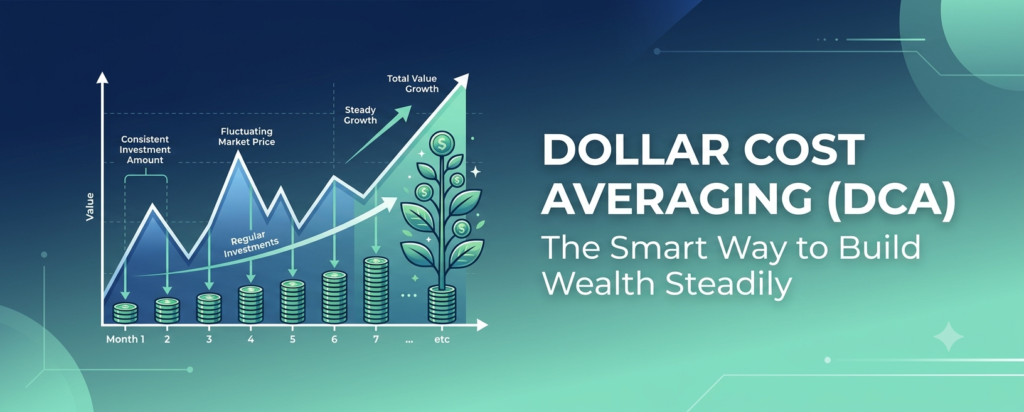
Dollar Cost Averaging, commonly called DCA, is an investment strategy where you invest the same amount of money on a regular schedule regardless of market conditions. Whether the market is experiencing rapid growth or sharp declines, your investment amount remains exactly the same. Since prices fluctuate over time, your fixed investment naturally purchases more shares when prices are low and fewer shares when prices are high. Over months and years, this creates an average purchase price instead of relying on a single market entry point.
Rather than obsessing over daily market movements, DCA shifts your attention toward consistency. Imagine filling a bucket one cup at a time instead of trying to dump in an entire barrel at once. Each contribution may seem small, but together they gradually create something substantial. This method is particularly attractive for beginners who receive regular paychecks because investing monthly or biweekly fits naturally into their financial routine.
Understanding the Basic Concept
The beauty of DCA lies in its simplicity. Suppose you decide to invest $500 every month into an index fund. During one month, the fund price may be high, allowing you to purchase fewer shares. A few months later, prices might decline, enabling you to buy more shares with the same $500. Since your investment amount never changes, your average purchase price smooths out over time.
Many retirement accounts already use this principle automatically. Every paycheck contributes a fixed amount into investment funds, quietly applying Dollar Cost Averaging behind the scenes without requiring investors to predict market highs or lows.
Why DCA Has Become Popular
Modern investors face endless financial news, social media opinions, and market predictions. Every expert seems to have a different forecast, making it nearly impossible to know when to invest. DCA eliminates that decision entirely.
Some reasons investors choose DCA include:
- Removes the pressure of finding the perfect buying opportunity.
- Encourages disciplined, long-term investing.
- Reduces emotional reactions to market volatility.
- Works well with automatic monthly investments.
- Fits easily into most household budgets.
Research consistently shows that while lump-sum investing may outperform DCA in many steadily rising markets, DCA remains highly valuable for investors who prioritize consistency and emotional discipline over perfect timing.
How Dollar Cost Averaging Works
Understanding the mechanics behind Dollar Cost Averaging (DCA) is surprisingly simple, yet its long-term impact can be powerful. The strategy revolves around investing a fixed amount of money at regular intervals—weekly, biweekly, or monthly—regardless of whether the market is rising, falling, or moving sideways. Instead of worrying about whether today is the “perfect” day to buy, you continue investing according to your schedule. Over time, this approach naturally balances your purchase price because you acquire more shares when prices are low and fewer shares when prices are high. This disciplined habit helps remove guesswork from investing while allowing compound growth to work in your favor.
Think of investing like planting a tree. You don’t dig it up every week to check if it’s growing. Instead, you water it consistently and allow time to do the heavy lifting. Dollar Cost Averaging (DCA) follows the same philosophy. Consistency often beats perfection because markets are unpredictable in the short term but have historically rewarded patient investors over the long term. Rather than reacting emotionally to every market headline, DCA encourages investors to trust their plan and remain committed to building wealth steadily.
A Simple Real-Life Example
Imagine Sarah has decided to invest $300 every month into a diversified exchange-traded fund (ETF). In January, the ETF trades at $60 per share, allowing her to purchase five shares. In February, the market experiences a correction, and the ETF falls to $50, enabling Sarah to buy six shares with the same $300. By March, the price rebounds to $75, so her investment purchases four shares. Although the share price changes each month, Sarah never changes her investment amount.
At first glance, it might seem disappointing to buy fewer shares when prices increase. However, over many months and years, this process creates an average purchase price that smooths out market fluctuations. Sarah avoids the impossible task of predicting market highs and lows while steadily increasing her ownership. Instead of stressing about daily price movements, she focuses on consistently growing her investment portfolio.
This example highlights why DCA is especially appealing for beginners. Most people receive a regular paycheck, making monthly investing a natural extension of their budgeting routine. Rather than waiting until they have a large sum of money available, investors can begin with manageable contributions and allow those investments to accumulate over time. Small, consistent investments often become surprisingly significant thanks to long-term market growth and the power of compounding.
Why Consistency Beats Market Timing
Many first-time investors believe successful investing depends on buying at the absolute lowest price and selling at the highest. While that sounds ideal, achieving it consistently is nearly impossible—even for professional fund managers. Market prices are influenced by economic reports, corporate earnings, interest rates, inflation, geopolitical events, and investor psychology. Predicting all these factors accurately is unrealistic.
This is exactly why Dollar Cost Averaging (DCA) has become one of the most trusted investment strategies worldwide. Instead of trying to forecast short-term price movements, investors simply commit to investing regularly. The strategy transforms investing from a stressful guessing game into a predictable financial habit.
Market downturns, which often scare inexperienced investors, can actually become opportunities under a DCA strategy. Since the investment amount stays constant, lower prices mean purchasing more shares. When markets eventually recover, those additional shares have greater potential to appreciate in value. This mindset helps investors view temporary declines as part of the normal investment journey rather than reasons to panic.
Consistency also builds discipline. Investors who automate their contributions are less likely to skip investments based on fear or excitement. Over decades, this disciplined approach can produce meaningful wealth while reducing the emotional mistakes that often hurt investment performance. The greatest advantage of DCA is not just lowering average costs—it is helping investors stay invested long enough to benefit from the long-term growth potential of the financial markets.
Benefits of Dollar Cost Averaging
One of the biggest reasons Dollar Cost Averaging (DCA) remains popular among financial advisors is that it aligns perfectly with how most people earn and save money. Instead of requiring a large lump sum, DCA allows investors to build wealth gradually using regular contributions. This makes investing accessible to students, young professionals, families, and retirees alike. The strategy emphasizes progress over perfection, proving that consistent investing often matters more than investing large amounts all at once.
Beyond convenience, DCA offers important psychological benefits. Investing can be emotionally challenging because markets rarely move in a straight line. Prices rise, fall, recover, and fluctuate constantly, tempting investors to make impulsive decisions. By following a predetermined investment schedule, DCA helps reduce emotional reactions and encourages long-term thinking. Investors spend less time worrying about daily price changes and more time focusing on achieving their financial goals, whether that’s retirement, buying a home, funding education, or building generational wealth.
Reduces Emotional Investing
Fear and greed are two of the strongest emotions affecting investment decisions. When markets soar, investors often feel pressure to buy because they fear missing out. During market crashes, those same investors may panic and sell at a loss because they fear prices will continue falling. These emotional decisions frequently damage long-term investment returns more than market volatility itself.
Dollar Cost Averaging creates a structured system that minimizes emotional interference. Since investments occur automatically according to a fixed schedule, investors don’t need to make constant buying decisions. This consistency encourages rational behavior and reduces the temptation to react to sensational financial news or short-term market swings. Over time, staying disciplined often proves more valuable than trying to predict the next market move.
Helps Manage Market Volatility
Volatility is an unavoidable part of investing. Economic cycles, inflation, corporate earnings, global conflicts, and central bank decisions all influence market prices. While these fluctuations can appear frightening, they are a normal characteristic of healthy financial markets.
With DCA, volatility becomes less intimidating because it naturally works within the strategy. When prices fall, each investment purchases more shares. When prices rise, existing investments generally increase in value. Rather than fearing volatility, investors can view it as an opportunity to accumulate assets at varying price levels. This balanced approach helps reduce the risk of investing a large amount immediately before a significant market decline while encouraging patience during uncertain economic conditions.
Builds Long-Term Investing Habits
One of the greatest strengths of Dollar Cost Averaging (DCA) is that it transforms investing into a habit rather than a one-time event. Successful investing is rarely about making one perfect decision—it is about making many good decisions consistently over time. By committing to invest a fixed amount on a regular schedule, you create a routine that becomes part of your financial lifestyle. Whether the market is experiencing record highs or temporary declines, your investment plan remains unchanged. This consistency removes hesitation and helps you focus on your long-term objectives instead of reacting to short-term market noise.
Over the years, these regular contributions can compound into significant wealth. Compound growth occurs when your investment earnings begin generating their own earnings, creating a snowball effect that accelerates over time. Investors who remain disciplined are often rewarded not because they predicted the market correctly, but because they stayed invested long enough to benefit from economic growth. The longer you continue your DCA strategy, the greater the opportunity for compounding to work in your favor.
Developing long-term investing habits also improves financial confidence. Instead of wondering whether today is the right day to invest, you know your plan is already in place. This confidence reduces stress and helps investors avoid making impulsive decisions based on headlines or social media speculation. Ultimately, DCA teaches one of the most valuable lessons in personal finance: consistency often outperforms perfection.
Common Mistakes to Avoid with DCA
While Dollar Cost Averaging (DCA) is a straightforward strategy, it is not entirely foolproof. Many investors unknowingly make mistakes that reduce its effectiveness. Understanding these pitfalls can help you maximize your long-term returns while maintaining confidence during changing market conditions.
Stopping During Market Declines
Perhaps the biggest mistake investors make is abandoning their DCA plan when markets fall. It feels uncomfortable to continue investing while prices are declining, but those periods often provide the greatest buying opportunities. Since DCA involves investing a fixed amount regularly, lower prices allow you to purchase more shares, potentially increasing future gains when markets recover.
History has shown that financial markets experience corrections and bear markets regularly, yet they have also demonstrated remarkable long-term resilience. Investors who stop investing during downturns may miss some of the strongest recovery periods. Remaining consistent is one of the core principles that makes DCA effective.
Investing Without Clear Goals
Another common mistake is investing simply because others are doing it. Every investment strategy should support a specific financial objective. Whether your goal is retirement, purchasing a home, funding education, or achieving financial independence, your DCA plan should align with that purpose.
Before starting, ask yourself:
- What am I investing for?
- How long can I leave this money invested?
- What level of risk am I comfortable taking?
- Which assets best match my financial goals?
Answering these questions helps create a focused investment strategy instead of investing without direction.
DCA vs. Lump Sum Investing
The debate between Dollar Cost Averaging and lump-sum investing has existed for decades. Both strategies have their strengths, and the better choice often depends on an investor’s financial situation, experience, and risk tolerance.
Lump-sum investing involves investing all available money immediately. Historically, because markets tend to rise over long periods, investing a lump sum has often generated higher returns than spreading investments over time. However, this approach also exposes investors to the risk of entering the market just before a significant decline.
Dollar Cost Averaging (DCA) takes a more cautious approach. Rather than trying to find the perfect entry point, investors gradually enter the market over weeks, months, or years. This reduces timing risk while making investing emotionally easier.
Which Strategy Is Better?
Neither strategy is universally superior. Each serves a different purpose.
Choose Lump Sum Investing if:
- You already have a large amount of cash available.
- You have a long investment horizon.
- You’re comfortable with short-term volatility.
Choose Dollar Cost Averaging (DCA) if:
- You receive regular income.
- You’re new to investing.
- You want to reduce emotional decision-making.
- You prefer a disciplined, automatic investment approach.
Many financial advisors recommend DCA for beginners because it encourages consistency while reducing the fear associated with investing.
Who Should Choose DCA?
DCA is an excellent strategy for:
- First-time investors
- Young professionals
- Retirement savers
- Long-term wealth builders
- Investors with monthly income
- Individuals investing in index funds or ETFs
- Cryptocurrency investors managing volatility
If you feel nervous about investing a large amount at once, DCA provides a practical and less stressful alternative.
Best Assets for Dollar Cost Averaging
Although DCA works with many investment types, some assets are particularly well suited to this strategy.
Stocks
Investing regularly in quality companies allows investors to accumulate ownership gradually. Blue-chip companies with strong financial fundamentals often make suitable long-term investments.
ETFs and Index Funds
Exchange-Traded Funds (ETFs) and index funds are among the most popular choices for DCA. These investments provide instant diversification by tracking a broad market index rather than relying on the success of a single company. For beginners, this diversification helps reduce risk while offering exposure to long-term market growth.
Cryptocurrency
Cryptocurrency markets are significantly more volatile than traditional stock markets, making DCA especially attractive. Instead of attempting to predict Bitcoin or Ethereum price swings, investors can purchase a fixed dollar amount regularly. This approach reduces the emotional pressure associated with dramatic market fluctuations while steadily building a long-term position.
How to Start Your First DCA Plan
Getting started with Dollar Cost Averaging (DCA) is easier than many people think. You don’t need thousands of dollars or advanced financial knowledge. A simple, consistent plan can make all the difference.
Follow these steps:
- Define your financial goal.
- Decide how much you can comfortably invest each month.
- Choose a diversified investment such as an ETF or index fund.
- Set up automatic recurring investments.
- Stay invested regardless of market conditions.
- Review your portfolio periodically without reacting to daily market movements.
- Continue investing consistently for years rather than months.
The most successful DCA investors are rarely those who invest the most—they are the ones who remain committed to the process.
Conclusion
Dollar Cost Averaging (DCA) remains one of the simplest and most effective investment strategies for beginners because it removes the impossible task of predicting market movements. Rather than waiting endlessly for the “perfect” time to invest, DCA encourages steady contributions that build wealth gradually over time. By purchasing more shares when prices are lower and fewer when prices are higher, investors naturally average their purchase costs while reducing the emotional stress that often accompanies investing.
No investment strategy can eliminate risk completely, but DCA helps manage one of the biggest risks facing new investors: making emotional decisions. Consistency, patience, and long-term thinking have historically been key ingredients for successful investing. Whether you’re investing in stocks, ETFs, index funds, or cryptocurrencies, a disciplined DCA strategy can help you stay focused on your financial goals and build confidence throughout your investing journey.
Frequently Asked Questions (FAQs)
1. Is Dollar Cost Averaging good for beginners?
Yes. Dollar Cost Averaging (DCA) is considered one of the best strategies for beginners because it encourages regular investing without requiring investors to predict market movements.
2. How much money do I need to start DCA?
Many investment platforms allow investors to begin with as little as $10 to $100 per month, making DCA accessible for almost any budget.
3. Does DCA guarantee profits?
No. DCA reduces timing risk but cannot guarantee positive returns. Investment performance depends on market conditions and the assets you choose.
4. Can I use DCA for cryptocurrency investing?
Absolutely. Many cryptocurrency investors use DCA to reduce the impact of extreme price volatility by investing fixed amounts regularly.
5. Should I stop DCA during a market crash?
Generally, no. Continuing your DCA plan during market declines allows you to purchase more shares at lower prices, which may benefit long-term returns when markets recover.